Introduction
Co-relation in figures involves identifying a specific relationship between a pair of images. You must apply the same logic found in the first pair to find the missing figure in the second pair.
Explanation Step by Step
To solve co-relation problems, observe the rotation, changes in size, addition or deletion of lines, and the positioning of elements within the figure.
Sub-topics
Co-relation - Figures
This sub-topic covers patterns where shapes transform through rotation, mirroring, or by changing the number of internal and external components.
Examples
Example 1

The first figure is a triangle, and the second figure is a quadrilateral (the number of lines increased by one).
If the third figure is a pentagon, then the fourth figure should have six lines (a hexagon).

hexagon
Tricks and Shortcuts
Check the "3 S" rule: Shape, Size, and Sides. Always verify if the movement is clockwise or anti-clockwise by a fixed degree.
Common Mistakes
Mixing up water images with mirror images is a frequent error. Another mistake is ignoring the count of small dots or lines inside the main geometric shape.
Practice Questions
Easy Questions
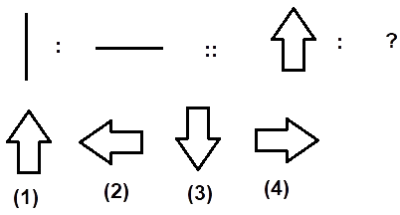
Medium Questions
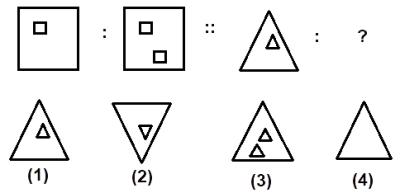
Hard Questions
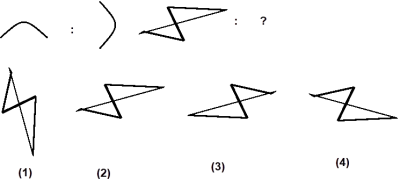
Revision Summary
Focus on the transformation logic—whether it is positional, numerical, or structural—to master figure co-relation.