Introduction to Patterns
Patterns are sequences that repeat according to a specific rule. In mathematics, recognizing patterns helps in understanding symmetry, logic, and geometric relationships. Geometric shape patterns focus on the arrangement and repetition of squares, circles, triangles, and other figures.
Concept Explanation
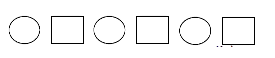
A geometric pattern is formed by repeating shapes in a predictable manner. To identify the pattern, one must look for the "core" or the repeating unit. For example, if you see a sequence like Circle, Square, Circle, Square, the core unit is (Circle, Square).
Sub-topics
Patterns - Geometric Shapes
Geometric patterns can change by shape, size, color, or orientation. In Standard 4, we focus on identifying the next shape in a series and understanding how shapes rotate or flip to create a sequence.
Examples
Example 1

Find the rule: Here, squares and circles are alternating.
The next shape will be a circle.
Tricks and Shortcuts
To find the next shape quickly, name the shapes out loud (e.g., "Red-Blue-Red-Blue"). The rhythm often helps identify the missing piece instantly.
Common Mistakes
Students often forget to check the orientation. A triangle pointing up and a triangle pointing down are different parts of a pattern even if they are the same shape.
Practice Questions
Easy Questions

Medium Questions
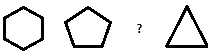
Hard Questions

Revision Summary
Patterns are based on rules of repetition. Always identify the core unit first. Geometric patterns involve shapes, sides, and rotation.