Introduction to Geometry and Symmetry
Geometry helps us understand the shapes and structures around us. One of the most beautiful aspects of geometry is symmetry, which refers to a balanced and proportionate similarity between two halves of an object.
Explanation of Symmetry
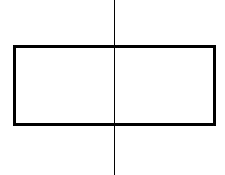
A shape is considered symmetrical if it can be divided into two equal parts that match each other exactly. This division happens along a specific line known as the axis of symmetry.
Sub-topics
Geometry - Symmetry
When you fold a picture along a specific line and the two parts overlap perfectly, the shape is symmetrical. If the parts do not match, the shape is asymmetrical.
Examples
Example 1: Letters and Numbers
Tricks and Shortcuts
To check for symmetry quickly, imagine placing a mirror along the central line. If the reflection completes the original shape perfectly, it is symmetrical.
Common Mistakes
Do not assume all shapes are symmetrical just because they look balanced. Always check if a fold would result in a perfect overlap.
Practice Questions
Easy Questions
- Which of these letters is symmetrical: F, G, or H?
- Is a circle a symmetrical shape?
- How many parts is a shape divided into by a line of symmetry?
Medium Questions
- Identify three English capital letters that have a horizontal line of symmetry.
- State whether the number 8 is symmetrical or asymmetrical and explain why.
- If a square is folded diagonally, do the two parts overlap perfectly?
Hard Questions
- How many lines of symmetry can be drawn for a regular rectangle?
- Explain why the number 7 is considered an asymmetrical figure in standard geometry.
- Draw a shape that has more than 4 lines of symmetry.
Revision Summary
Symmetry occurs when two halves of a shape are identical. Objects that match perfectly upon folding are symmetrical, while others are asymmetrical. Common symmetrical symbols include 'A', 'B', '3', and '8'.